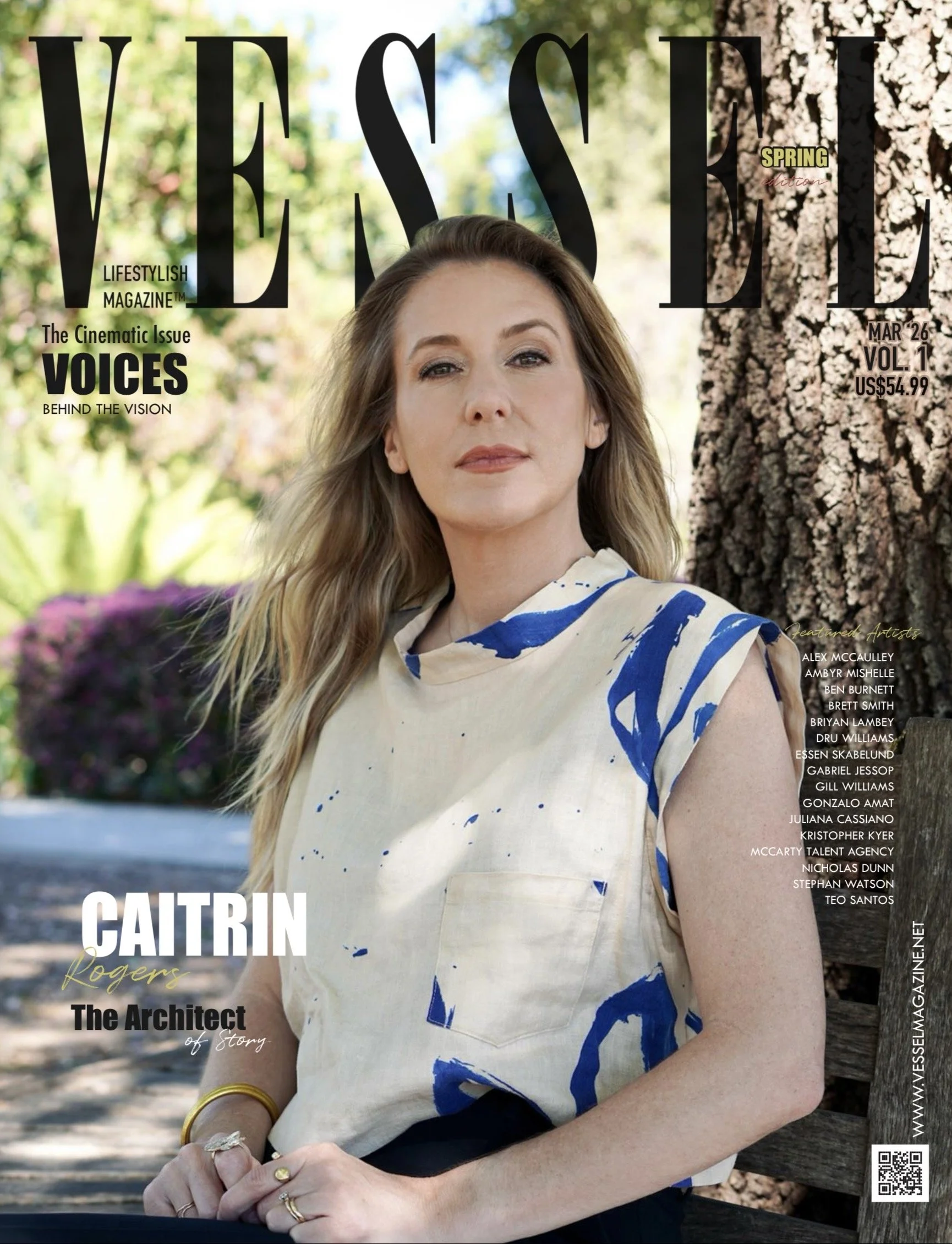
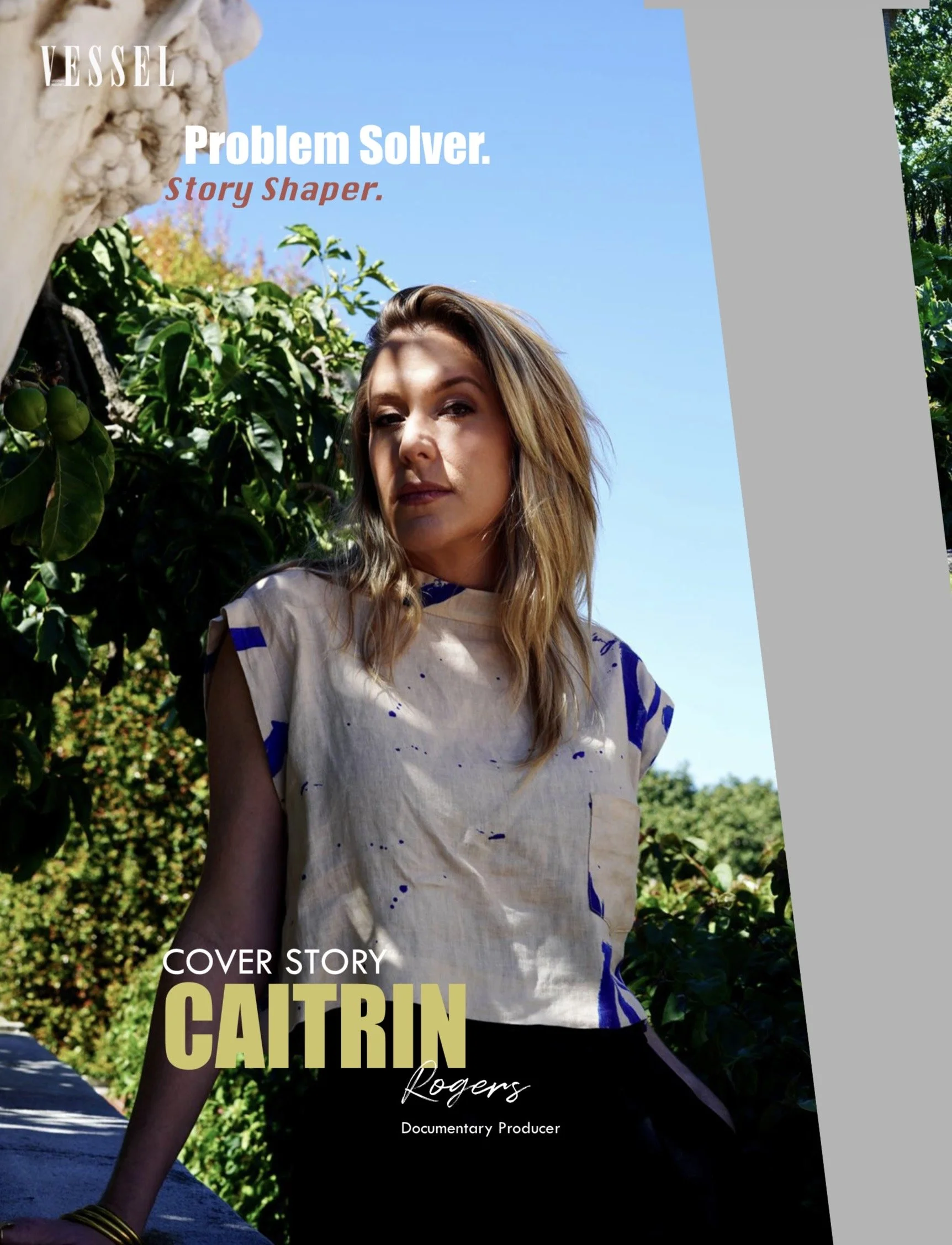
CAITRIN ROGERS, Producer
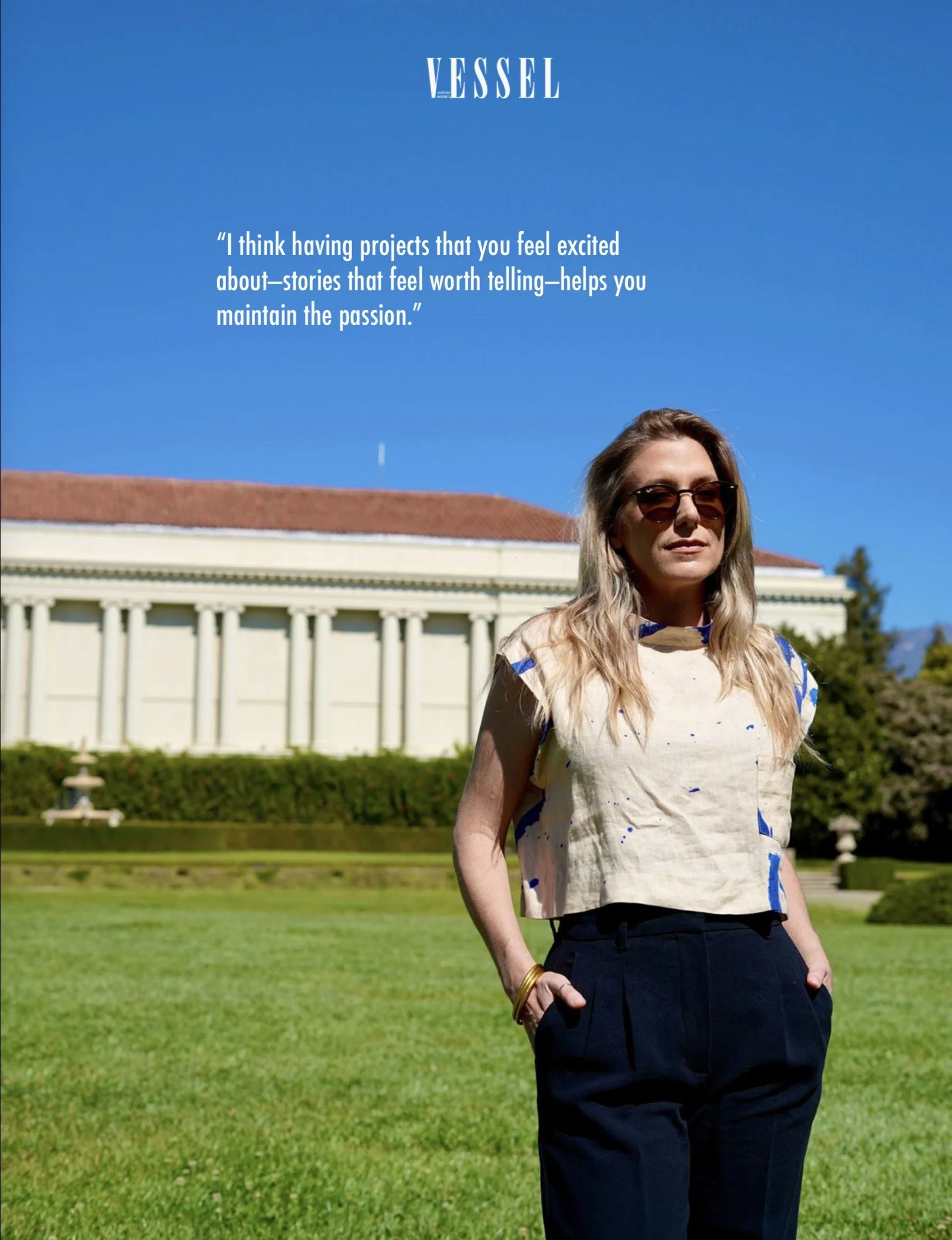
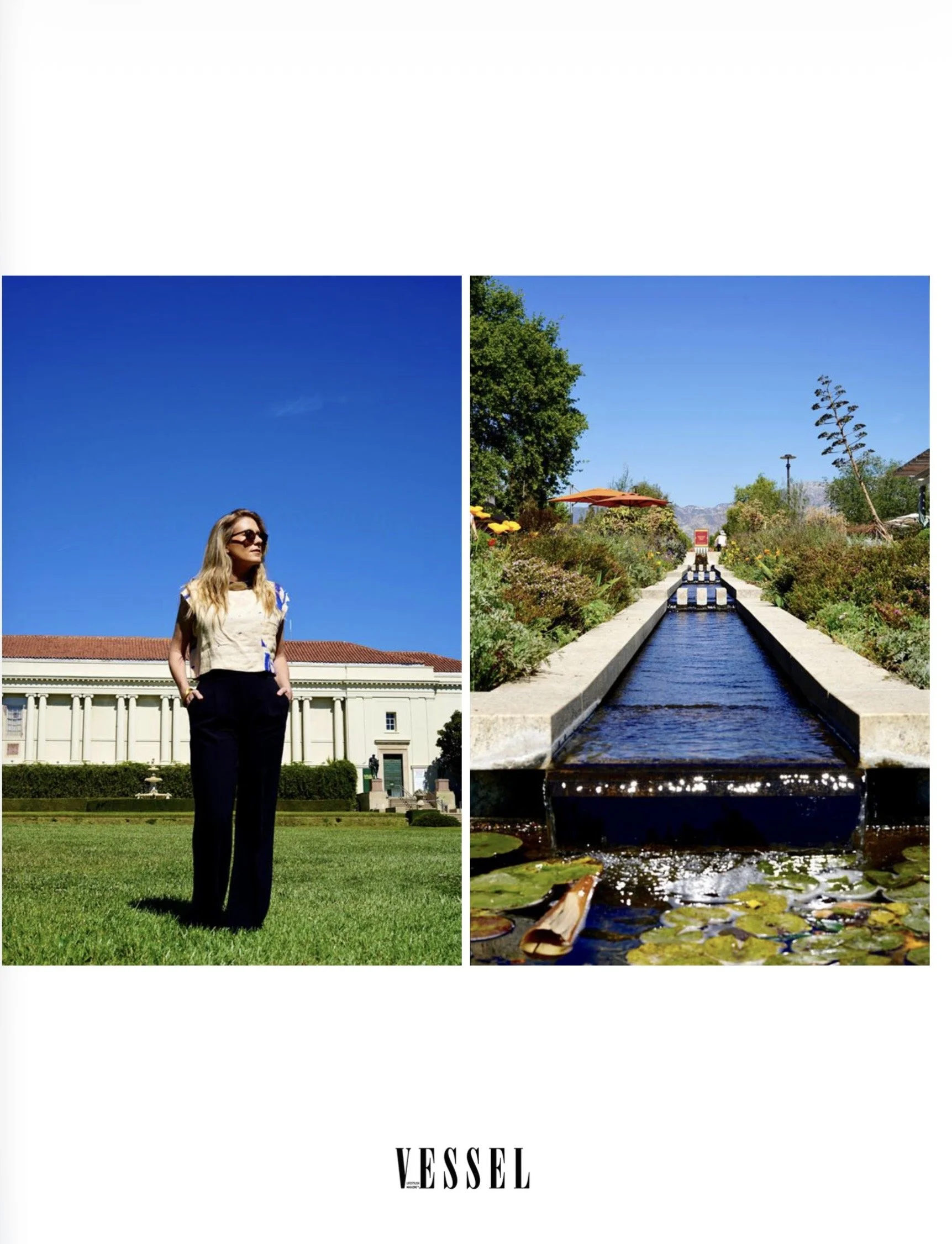
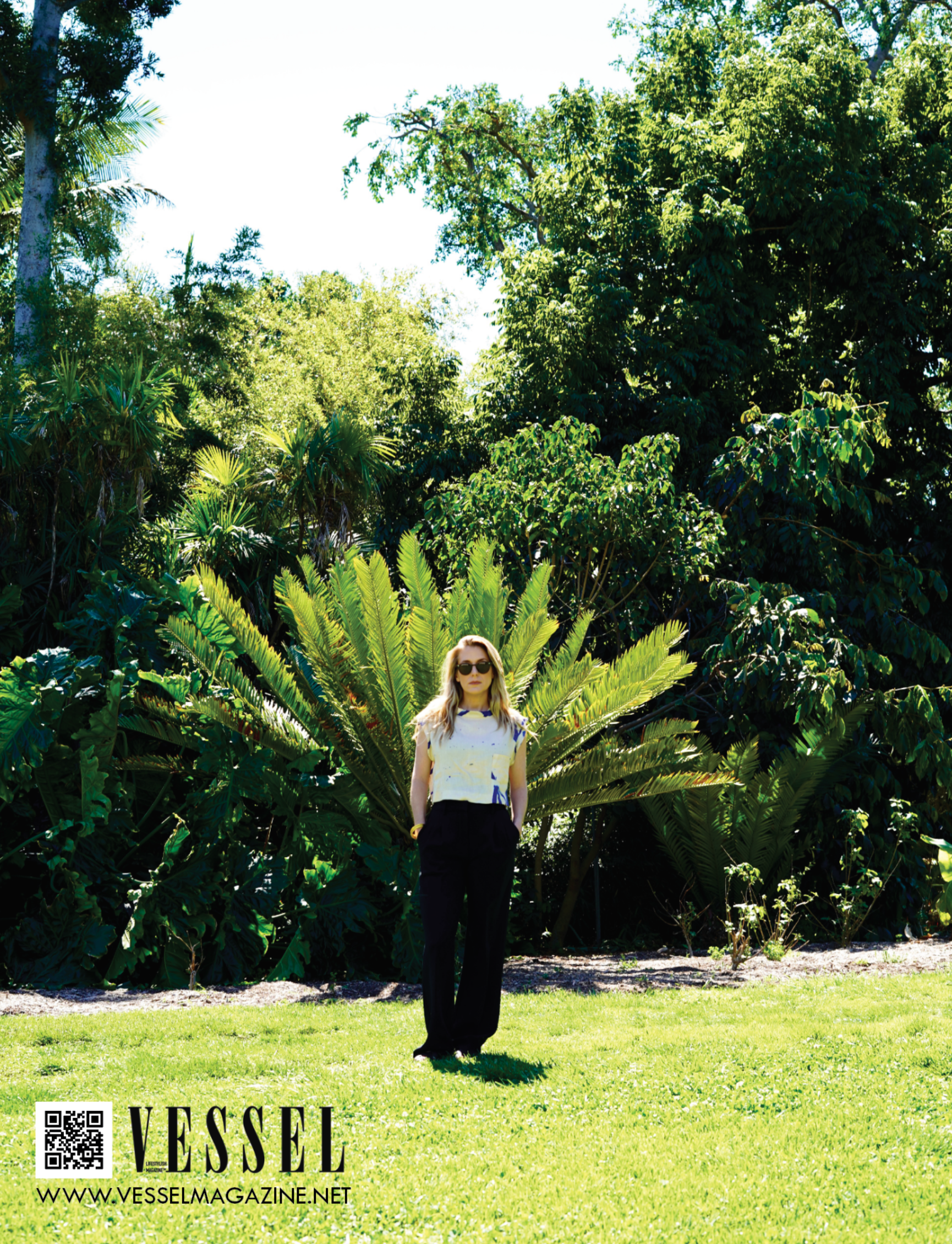
On a warm spring day in Pasadena, I arrived early at the Huntington Library, carrying a kind of anticipation that had been building for over a month. There’s a particular energy that comes with preparing to meet someone whose work you admire—someone whose storytelling doesn’t just exist on screen but lingers. This was one of those moments. I had my questions prepared, microphones set, and my camera resting patiently in my bag, all waiting for her arrival.
In the days leading up to the interview, she had reached out for guidance on what to wear. I encouraged simplicity—something that would allow her presence to speak first, something that would translate confidence through the lens without distraction.
When she finally appeared in the bag check line, there was an ease to her presence that immediately grounded the moment. We exchanged greetings and stepped inside, quickly finding a quiet, shaded area to settle into. It was there, without ceremony yet with undeniable intention, that I began my conversation with Academy Award–winning producer, Caitrin Rogers.
Vessel: To begin, could you briefly introduce yourself to our readers?
Caitrin: Well, my name is Caitrin Rogers, and I’m a documentary film producer. I grew up in Massachusetts, and I have lived in California now for over 25 years, so I feel like a Californian. I don’t think I ever intended to do this job. I don’t think I knew what a producer was. I’m not sure I know what a producer does now, because it’s a very hard thing to define, but I knew I wanted to be in the film industry, and I knew I wanted to get away from the cold Massachusetts winter, so I came to California and got an internship when I was a junior in college. That turned into a job, which turned into another job, and another job, and then one day you wake up and you’re like, “I guess this is what I do now.” And it’s been great, and I’ve been very lucky. In many ways, it is a very wonderful profession to have. I do think a lot of times people see just the tip of the iceberg, which is the premieres and the parties, and that’s such a small fraction of what it is that we do. At times, it is a very tricky profession, but very fun.
V: Have you ever thought that you might follow your parents’ footsteps?
C: Well, that’s funny—that is a very good question, because my mom was in the field of public health, and my dad was a lawyer, and neither of those things were of interest growing up. I wanted to check out Hollywood, but now what I do is actually very close to what my dad did as a lawyer. I take care of a lot of the business affairs of the company that I run, and so a lot of that is legal, and I think I learned a lot from him. And there are many times now, as a much older person, that I often think, “Wow, I should have probably just gone to law school like he did.” But as a child and growing up, no, I had no interest in following in their footsteps. Also, I feel like, for my dad especially, he was an incredibly intelligent person. He went to Yale. He was a great lawyer. I think I felt like I would never be quite as successful as he was at being a lawyer. So, why not try something different?
V: I feel grateful that my family never forced us to become a doctor or a lawyer. In fact, nobody on either side of my family tree is a doctor or lawyer. My parents had normal jobs—my dad was a salesperson for a pharmaceutical company in Hong Kong, and my mom worked at schools. So, by the time I told her, “I want to do art as my major,” she didn’t stop me.
C: And I think that’s really important, because I think when you, as a parent, try to push something, your kids naturally rebel. So even for my dad, his dad was a doctor and really wanted him to be a doctor, and so his form of rebellion was to become a lawyer. And I feel very grateful to my parents for allowing me to pursue this, because I think there’s a million different ways it could have gone sideways and not worked out. And I feel very lucky that I have been able to create a career doing what I do, but they had that trust in me to go and figure it out and kind of get up on my own two feet. Because not everybody who tries to pursue a career in Hollywood is quite so lucky.
V: I agree.
For those who may not fully understand the role, how would you describe the primary responsibilities of a producer?
C: Yeah, it’s a really hard thing to define, because I think producers do a lot of different things, and it also depends on what you’re producing—what kind of project. But I would say the primary function of a producer is problem-solving. Whether that’s finding money for a project, navigating issues that come up during production, seeing the project through post-production, or getting it distributed so that people can actually watch it. I think a producer touches all stages of the film process. If the director’s role is to figure out what the film is going to be, it’s the producer’s role to figure out how you’re going to achieve the director’s vision. So, it’s a lot of that, and also being able to pivot should something not be tenable. You have the ability to change and come up with a different solution to each problem.
V: That makes sense. It seems like everyone knows what the director does, but no one really knows what the producer does exactly.
C: It’s funny, because we do a lot of Q&As after a project comes out. You’ll go and do the Q&A with the director, and everyone knows what to ask the director, but nobody knows what to ask a producer. Also, I don’t think anybody ever wants to hear about all the problems you had trying to make this film, which is kind of what the producer has to deal with.
V: So, in your opinion, what distinguishes a truly great producer from the rest?
C: I think the best producers are the people who have the ability to look ahead and anticipate problems before they happen. I think it’s really quite easy to see the problem directly in front of your face and figure out how to solve it, but a producer really has to have the 30,000-foot view of the whole thing and be able to figure out every different way each decision might go sideways and how you would fix it, and always have a contingency plan. If a problem is going to arise, you always have to have a solution. I feel like a lot of producers come to me with problems, but they don’t have a recommendation on how to fix them. I feel like you really need to be able to not just identify the problem but understand several different approaches and possible outcomes. And you have to be very organized.
V: I’ve been in retail management for a long time. A lot of the time, it’s not about all these little things you worry about. It’s actually the people—your team—because the people part is the hardest. Operational stuff I can control, but I can’t control if someone decides to quit.
C: You have to be able to ask the questions—the hard questions—and also understand when you need support from someone else and ask for help.
V: Do you typically focus on one project at a time, or do you find yourself managing multiple productions simultaneously?
C: I used to, and I love that. I love working on my own project. It really allows you to become an expert on “whatever that thing is,” and oftentimes it’s things you never dreamed you’d become an expert on. It allows you to pour your heart and soul into something and have a lot of ownership of it. But now I run a company, so I oversee all of the projects. We work on many things at once, and that is also fun because it’s never a dull moment. There’s always something. And I also think it’s really helped me become a better producer, because now, after the amount of time I’ve spent doing it, we have encountered so many issues and problems along the way that we can draw on our past experiences to figure out how to navigate new issues that come up in projects.
V: What would you say is the most challenging aspect of working as a producer?
C: I think the most challenging thing is that no project is the same. So, no issue is the same, right? Every issue or problem we have encountered is distinct and different from the issues we encountered on the last project. And it’s always something that comes out of left field that you didn’t really anticipate, and then you have to figure out your way through it. I do, again, feel lucky that we now have this sort of wealth of experience to help us move through some of these new issues. But I think with every project, basically, you’re starting from scratch, figuring out this new thing. And it’s never the same two issues.
For full interview, get your copy today